
John Shinavier - MA, RYT, LC

Therapist | Life Coach | Career Coach Speaker

  • About Me
  • Yoga Therapist/Instructor
  • Therapist
  • Life Coach
  • Downloads
  • Contact Me
  • Yoga Therapist

Why Therapy? Why Now?

Posted by John Shinavier - Life Coach | Speaker on December 21, 2011
Posted in: Therapy Blog. Tagged: Finding a therapist, The right therapist for the client, the wrong type of therapist, When therapy is needed, When therapy is useful. Leave a comment


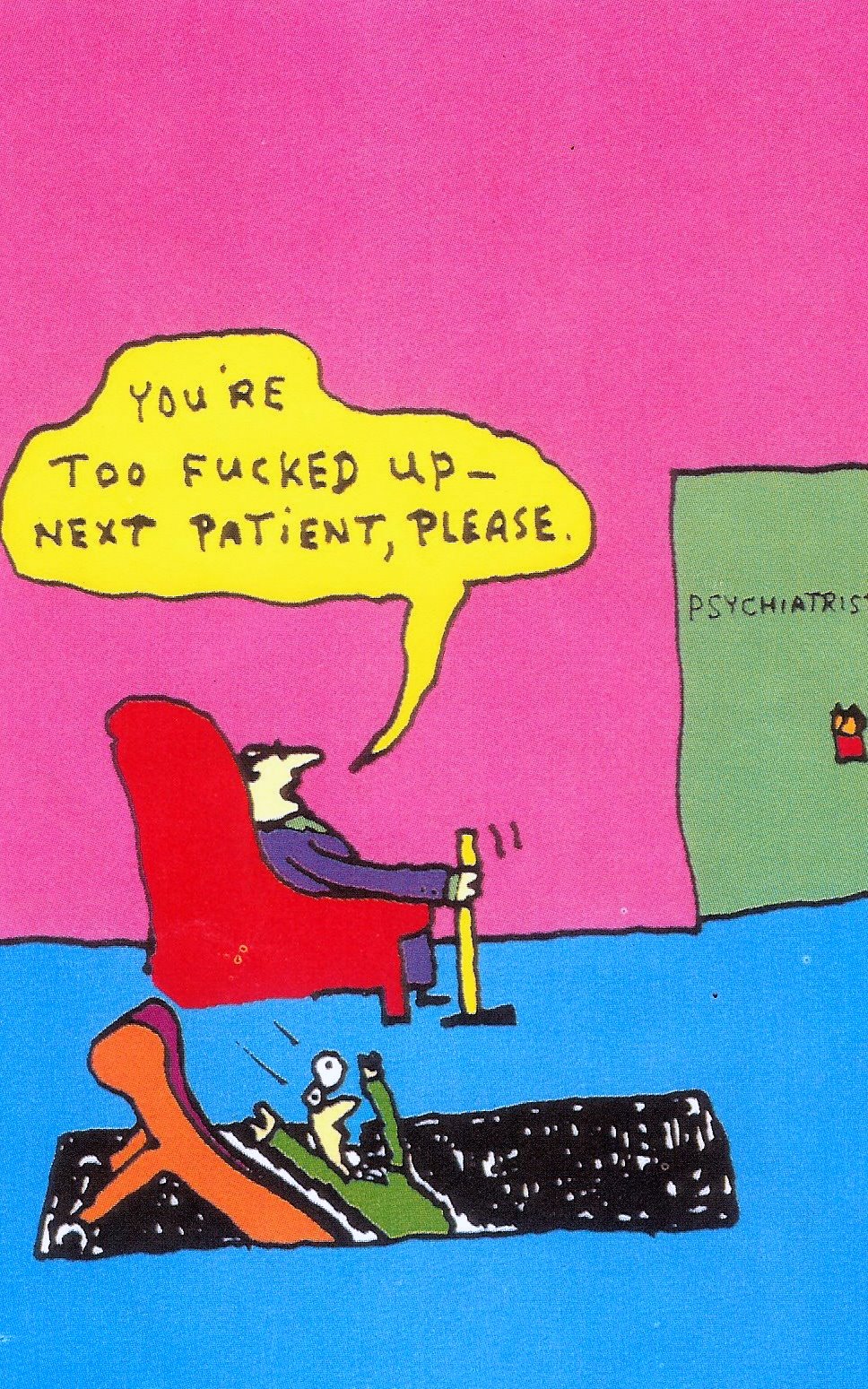
image-2

Therapy in all its forms is available to just about anybody.  From Free Clinics to private practice, there are good therapists to be found in both. It takes courage to reach out when you need help. It takes time and tenacity to find the “right” therapist (more on this later.) It also takes a willingness on your part to bare your soul to a stranger! Therapy as a rule will require a commitment of time anywhere from three to eight months, depending on your specific need.

The following could be reasons for you to seek out a therapist:

So, lets say you’ve become aware of a pattern of behavior in yourself that you’re not particularly proud of. Your parents (if you’ve shared this with them) have said
“Don’t worry so much. We love you.” This is well-meaning advice, but it didn’t work when you were a teen, and it doesn’t work now. You go to a good friend and they might respond:
“You always feel this way after a breakup. It’ll all change when you meet someone new.” Possibly true, but these feelings that come in between relationships never seem to change, and always keep you doubting if you made the right decisions to begin with.

Nothing is going to change in what you’re feeling, because you may be choosing poor behavior to avoid feeling worse. These behaviors could be drinking to excess, not sleeping or sleeping to much, over eating etc..   What needs to happen, is for you to process these feelings in a different way, before you  begin to notice any difference in your situation.

————–

Your whole young adult life you’ve never been without a job/career. In fact working has “been your life!” Somewhere you forgot to have any kind of meaningful personal life. Your social life consisted of who you were working with, and when that job was over you fell in with the people on your new job. The cast of your social life could be scripted as if its from a reality show. This may have worked fine for you in the past, but now its all becoming too overwhelming and empty.

————–

You’re in your twenties. Your parents loved you, but they never instilled any worldly wisdom, barring their own mistakes, in you. You’ve been drifting perhaps for years now. You notice that your peers are doing exciting things with their lives, such as going after a particular career, or enrolling in school, or traveling to some other county to work. You’ve never left your birthplace and right about now, you feel like your the only one who feels like they’ve reached a plateau and are stuck!    

—————-

You desperately want to change, so you start asking around for recommendations of therapists that others might suggest. Initially, everyone seems expensive or the places that offer free to sliding scale fees have long waiting lists.  Your back to where you started. Don’t be discouraged. Save a little money, or ask for a loan from someone who knows your situation, then if that is secure, start calling and leaving messages (short) on therapists answering machines asking if you could see them for an initial visit. The term “initial visit”, is using therapy language that communicates to the therapists that you are a bit more savvy in your search.  For some it’s considered the first meeting,  for others it’s a meet and greet that requires no commitment from either of the parties.  After you’ve left more than a few of these messages on therapists machines, you’ll find that several will return your call.  

Most of  the therapists that I know have good hearts. Most of them, not all, but most of them will see one or two clients if not for free, then at a sliding scale. It all depends on their work load, and if they’re able to manage  working with possible clients who cannot afford their full fee. If they agree to see you for that initial first visit, then show up on time, and know what it is that you want to see them about. Understand, it is possible that they will hear you and take you on for a limited amount of sessions.

In the beginning of this blog I mentioned working with the “right” therapist.   This means finding a therapist that works in a style that your comfortable with.  Some therapists work in the here and now, while others will concentrate more on your past, in other words, what brought you to this point in your life.  Some will give homework, while others will just listen to you and say very little.  These are all correct therapeutic modalities, but not everyone of them is going to feel like  a fit for you.

In the end, its going to be about the relationship that you have with your therapist that will provide the trust to provide the corrective experience for you to heal.     

John J. Shinavier, MA, RYT, Life Coach

Share this:

  • Share on Facebook (Opens in new window) Facebook
  • Share on X (Opens in new window) X
  • Share on LinkedIn (Opens in new window) LinkedIn
  • Share on Like (Opens in new window) Like
  • Email a link to a friend (Opens in new window) Email
  • Share on Pinterest (Opens in new window) Pinterest
  • Share on Tumblr (Opens in new window) Tumblr
  • Share on Reddit (Opens in new window) Reddit
  • Share on Pocket (Opens in new window) Pocket
  • More
  • Print (Opens in new window) Print
Like Loading...

Men’s Groups

Posted by John Shinavier - Life Coach | Speaker on September 30, 2011
Posted in: Men's Group Blog. Tagged: man and therapy, Men need to talk too, mens groups, therapy and men, Therapy for men, therapy groups for men, wounded warriors. Leave a comment

man praying

As a rule, groups are recommended as the last step in the healing process in many types of therapies.  That transition from working in isolation with yourself and a therapist, to the socialization aspect of sharing much of that same information with men who have struggled with similar problems is when closure, (if this is possible), happens. Most often the client and myself will come to a realization that for the client to continue healing, he or she must continue to heal in a group setting.

An example of this is would be a man who is going through a “mid-life crisis.”  He might be experiencing depression, anxiety, loss of libido, addiction, career change etc..  When he has worked through one or all of the above issues that are specific to his situation with an individual therapist, then group therapy would put those issues in perspective.

Group therapy can be a most powerful experience.  The sharing of the individuals experience with a group of men in a safe environment lets him know that he is not alone in his feelings.  In the listening and the exchange of information what has been experienced as overwhelming is normalized by the collective amount of feed-back that he receives from the group. He now acquires tools and information from the group as well as choices that he never would have thought possible on his  own.

*  *  *  *  *

The following are a variety of groups that I could be running at any given time.  Call if you are interested in joining…

  • “Seasons of a Man’s Life.”  The overwhelming awareness that time is passing and you must change your goals, views etc. Normally the age for this is men from thirty-two to forty-eight.
  • “The Way of Healing From Sexual Abuse.”  Healing from the sexual abuse that happened to you as a child or young adult.  This will be open to men from age eighteen to fifty.
  • “Dealing with the New Economy.”  A combination workshop/group processing for the man who is trying to adapt in this uncertain time.  This is open to any man from age twenty to sixty.
  • “Finding and Depending on your Intuition as your source of truth”  A man’s
    guide to his spiritual/mystic self.  
    This group would be open to any man who is looking to find his own spiritual tools.

Share this:

  • Share on Facebook (Opens in new window) Facebook
  • Share on X (Opens in new window) X
  • Share on LinkedIn (Opens in new window) LinkedIn
  • Share on Like (Opens in new window) Like
  • Email a link to a friend (Opens in new window) Email
  • Share on Pinterest (Opens in new window) Pinterest
  • Share on Tumblr (Opens in new window) Tumblr
  • Share on Reddit (Opens in new window) Reddit
  • Share on Pocket (Opens in new window) Pocket
  • More
  • Print (Opens in new window) Print
Like Loading...

Who Am I?

Posted by John Shinavier - Life Coach | Speaker on September 23, 2011
Posted in: General Blog. Tagged: career choice, job identity, mentoring, paradigm, When therapy is needed, Who am I?. Leave a comment

Who am I?

Today I was reminded again of how a high percentage of men see their identity through their job or career choice.  As client after client is reduced to depression, tears, addiction, and self-hatred because they cannot find work, they ask me how not to take this personally.  The explosion of high-tech industries only furthers to alienate those who had jobs in management, production, sales and the film industry.

Perhaps a new paradigm is being formed, where there is room for only the very young who are gifted in the technologies of the present time.  Many cannot see themselves in this economy, much less keep pace with the new social networks that appear to be driving it. However, the future will eventually demonstrate that these times are damaging many of the younger unemployed who have never gotten their foot in the door, much less worked at a job over a four-year period.  Their sense of self is still in its infancy.  Most have not had success in the workplace or felt the sensation of mastery that comes with it.  Many remain fluid— optimistic and trusting that something will come their way.  How
long can this sense of trust last?

It’s been almost four years since the economic collapse, and clients are beginning to hemorrhage their self-worth.  Three or four years is an eternity when you’re in your late twenties or early thirties.

People now between the ages of forty-five and sixty were able to take time in their twenties to explore their options and to have a period of internship in any number of trades, careers and occupations before finding a suitable and satisfying position in the workplace.  Today’s youth do not have that luxury.  Many are lucky to have a job at all, but I would venture to say that a good twenty-five percent have had only one option and that was to move back home.

This step backwards is a humbling experience that can distort the natural developmental stage of “leaving the nest” and learning to trust oneself out in the world, absent from parental oversight.

I speak from not only the experience of listening to many clients in my practice, but, also from my own perceptions as a twenty-four year old who moved to New York knowing only one person in Manhattan, with just one bag and my own youthful optimism I was going to make my mark there.  That core belief in myself was firm, as it should have been for any young man fresh out of school.  “No” was not an option for me.  I believed so strongly that I could do whatever I wanted that I did get several jobs that were ideal for who I was then.  Beyond that, the  possibilities seemed endless.

I haven’t heard that kind of optimism in my practice in four years, nor do I see it anywhere out there, except perhaps among the very rich, who it appears, are just lucky to be born to wealth and privilege.

This is a time when the young need mentoring and someone older to believe in them. We all know someone whom we can help emotionally during difficult times.  Right now the youth require a new perspective, a more detached view of themselves to counteract the experiences that have only left them feeling incomplete or damaged.  A career is vitally important, of course, but it is only a part of who a person is on the larger stage of life.

Mentoring is a two-way street that is mutually beneficial, because each partner has a generational perspective to share. From my own experience I can say that this has been consistently true.

Share this:

  • Share on Facebook (Opens in new window) Facebook
  • Share on X (Opens in new window) X
  • Share on LinkedIn (Opens in new window) LinkedIn
  • Share on Like (Opens in new window) Like
  • Email a link to a friend (Opens in new window) Email
  • Share on Pinterest (Opens in new window) Pinterest
  • Share on Tumblr (Opens in new window) Tumblr
  • Share on Reddit (Opens in new window) Reddit
  • Share on Pocket (Opens in new window) Pocket
  • More
  • Print (Opens in new window) Print
Like Loading...

Perfecting the Interviewing Process

Posted by John Shinavier - Life Coach | Speaker on September 23, 2011
Posted in: Life Coach Blog. Tagged: appearance, being fired, body language, Interviews, Life Coach, life coaching, look your best, resumes. 1 Comment

tumblr_mrldcciBH21rj80k1o1_500

Thereare many, many more intangibles at play in an interviewing process besides your appearance and the particular skill set that you bring to the job. I have coached many clients on preparing for an interview that brings about a new empowerment for them, whether they receive the position or not. You only have yourself, your own accountability, and your skills to present yourself in a positive way. No one, who helps you prepare for an interview can promise you anything more than this.

There are so many variables at work that pass unconsciously and consciously between the interviewer and the one being interviewed in the first three minutes of the appointment. Below are some of the topics that I coach the
client in how to give the “Perfect Interview!”

Having had many careers spanning my fifty plus years on the planet, my people skills have been sharpened, and I’ve more often than not gotten the job that I’ve  wanted because I have used these following skills and insights to their best advantage.

  • Treat the interviewer as a potential client without kissing up!
  • Don’t memorize, but know the important points of your resume
  • Rather  than reading your resume, ask what they are looking for  and provide those details
  • Watch your body language, it speaks volumes about you
  • Ask questions, it shows interest and passion
  • Watch your speech, don’t rush, don’t over talk. Stay on your breath
  • Listen, lean forward
  • Look in their eyes
  • Your voice should be level, without losing energy
  • Act “as if” you already have the job. This relaxes your body, and reads as confidence
  • Tell them, once they’ve identified who they are and what they need, the skills you bring to the position
  • Do have at hand, referrals from people, who will speak well of you
  • If you’ve been fired, be honest, but make it more about the positive aspects i.e.: what you learned etc.
  • It’s okay to ask the interviewer how long they’ve worked for the company. Remember they are not out for your job, their just doing theirs. In answering that question they unknowingly will reveal information, negative or positive about the company.
  • What is your web presence? Your future employer might have already checked this. It’s very important that depending on the skills your selling, that you blog, have a web page (new business card) and generally have nothing incriminating on the web that shows you in a negative light.
  • Look your best!  Have a set of clothes, dry cleaned, pressed and ready for interviews.  Have a manicure, or at least be aware of what your fingernails look like; torn, and bloody cuticles are noticed and do not inspire confidence.  Wear something that your are comfortable in, but make sure it fits correctly.

All you can do is your best. The above information can help you. This much is under your control.

Share this:

  • Share on Facebook (Opens in new window) Facebook
  • Share on X (Opens in new window) X
  • Share on LinkedIn (Opens in new window) LinkedIn
  • Share on Like (Opens in new window) Like
  • Email a link to a friend (Opens in new window) Email
  • Share on Pinterest (Opens in new window) Pinterest
  • Share on Tumblr (Opens in new window) Tumblr
  • Share on Reddit (Opens in new window) Reddit
  • Share on Pocket (Opens in new window) Pocket
  • More
  • Print (Opens in new window) Print
Like Loading...

One Client’s feelings of Depression

Posted by John Shinavier - Life Coach | Speaker on September 23, 2011
Posted in: Therapy Blog. Tagged: Depression, feeling lost and alone, the self, When it's time to take an anti depressant. 1 Comment


Depression

When I took myself off of my anti-depressant, I did so because I was curious to experience how I would feel without it. In other words, would the depression be gone? I wanted to see if there was a part of myself that I had been missing that the drug had kept hidden? I have taken them off and on, for fifteen or so years. I’ve been off of them now, for over two months.

I feel porous and raw where I once felt complete and secure. I watch the news, and become frightened. Things that would normally not cause me to be afraid like losing income, getting older, returning a phone call from a friend, now make me freeze up and isolate. In my life, I feel like an imposter, no matter what I have done in my career, it all feels like I’ve been acting! Everyone else, to me, feels like their adults, except me. When I feel like this, I feel the overwhelming helplessness of a child. I notice that I don’t feel like I have any power. I will acquiesce more to others suggestions than I normally would when on my anti-depressant. I don’t care now; it’s just easier not to have a discussion about it. I’m also terrified that people can see this darkness inside of me. I’m angry more often. I think this is how I noticed the change in my mood more. I never got real angry on the medication, now I get indignant, easily offended and have blown up at complete strangers. I swear too much. I don’t like being an angry person. The anger is like venom that once expressed leaves me feeling empty and ashamed.

One therapist told me it’s how I express my loss of power. I get angry then at myself and I express this through self indulgent drug taking and days of reckless sex. I remember when I was younger, in retrospect, I guess I was always running from it (depression), from the jobs I chose, to being overly concerned about my appearance and my need to please everyone.

I don’t drink and I don’t normally take drugs for pleasure, but I do waste a lot of time
now. I wonder how my life would have been different had I not been driven to choosing things, that I now understand, were fueled by my depression, rather than a sense of fearlessness? Depression is such a waste of time.

I don’t want to grow older being angry. There is so much more that I want to do in my life.
~
The above client has since returned to taking their antidepressant.

Share this:

  • Share on Facebook (Opens in new window) Facebook
  • Share on X (Opens in new window) X
  • Share on LinkedIn (Opens in new window) LinkedIn
  • Share on Like (Opens in new window) Like
  • Email a link to a friend (Opens in new window) Email
  • Share on Pinterest (Opens in new window) Pinterest
  • Share on Tumblr (Opens in new window) Tumblr
  • Share on Reddit (Opens in new window) Reddit
  • Share on Pocket (Opens in new window) Pocket
  • More
  • Print (Opens in new window) Print
Like Loading...

Banish Shame from Your Life

Posted by John Shinavier - Life Coach | Speaker on September 18, 2011
Posted in: General Blog. Tagged: Shame, the root of all depression, therapy, Therapy around the issue of shame. Leave a comment

The Heavy Burden that is Shame

Shame is the inner experience of being “not wanted.” It is feeling worthless, rejected, and cast-out. Guilt is believing that one has done something bad; shame is believing that one is bad. Shame is believing that one is not loved because one is not lovable. Shame always carries with it the sense that there is nothing one can do to purge its burdensome and toxic presence. Shame cannot be remedied; it must be somehow endured, absorbed, gilded, minimized or denied. Shame is so painful, so debilitating that persons develop a thousand coping strategies, conscious and unconscious, numbing and destructive, to avoid its tortures. Shame is the worst possible thing that can happen, because shame, in its profoundest meaning, conveys that one is not fit to live in one’s own community.

The Controlling Family

This is the family which is ruled by decree. It is the authoritarian, or the rigid, or the meddlesome family. The controlling family is one wherein any threat of deviation from the “way-it’s-supposed-to-be” is rapidly squashed. This is the family of “piano lessons, whatever,” of “you’ll do every vestige of your homework before you can talk to your friends,” of “don’t speak unless you are spoken to.” This is the family that is portrayed with clarity and passion in Dead Poets Society: the blindly ambitious father “knew” what was “best” for his son, imposed his paternal vision, never seeing his son’s true interests, resulting in catastrophic consequences for his son’s sense of worth and for his will to live. This is example of how the shame engendered by the parent’s domineering control can cause the child to believe he has no “self” worth preserving: as it becomes impossible to live according to his own desires, and as he cannot give his parent what he wants, he has no choice but to kill himself.

The controlling family carries deep shame. It’s “solution” is to make the exterior “perfect”, thus, hopefully obscuring and forgetting about the rot within. The parents in this family cannot tolerate any variation on their crystallized ideas and styles; hence they give little credence to the self-aware wishes of the individual to mobilize for self-fulfillment.

The shame-bound person clings to his image, after all it is the most positive thing he has going for him. He believes that within he has no real self, that he is not loved, or respected, or needed, so he must make himself loveable, appear respectable, and create the illusion of being indispensable to others. He works hard at it. He lives by his false-self, often bouncing between over- and under-inflated presentations of himself. He does not strive for self-fulfillment, only for self-image fulfillment. He is desperate to be needed by others around him,


Share this:

  • Share on Facebook (Opens in new window) Facebook
  • Share on X (Opens in new window) X
  • Share on LinkedIn (Opens in new window) LinkedIn
  • Share on Like (Opens in new window) Like
  • Email a link to a friend (Opens in new window) Email
  • Share on Pinterest (Opens in new window) Pinterest
  • Share on Tumblr (Opens in new window) Tumblr
  • Share on Reddit (Opens in new window) Reddit
  • Share on Pocket (Opens in new window) Pocket
  • More
  • Print (Opens in new window) Print
Like Loading...

Listening…

Posted by John Shinavier - Life Coach | Speaker on September 5, 2011
Posted in: Couples Blog. Tagged: a shared language, couples counseling, divorce, listening, marriage. 3 Comments

tumblr_mzp4moAedd1si1eygo1_500


A great teacher once told me just to be silent and I would learn all that I needed to
learn. It’s been a life-long exercise that I’ve tried to practice off and on, but lately has me wishing I could take a year off and go somewhere just to be quiet.  I suppose in some indirect way my career has been chosen with this in mind. To sit and truly listen to another with no mind chatter and no agenda makes me a better listener.

In working with couples I teach a new way of how they can hear what the other is trying to say as well as be heard themselves.  I encourage them to practice this exercise at home.

The exercise is simplistic in its structure; facing each other on the couch, one speaks the other listens.  No one is allowed to interrupt.  I give a pencil as a “totem”
and whoever has the pencil holds the attention and does the talking. Both are given a set time of five minutes to start and the pencil (totem) is exchanged several times between them.

After they’ve had a few go rounds with each talking about their positions on a topic, I then ask them to speak only to the subtext of the other.  In other words, stop
listening to the words and identify the feelings that are under the dialogue.  This takes communication to a deeper level as they recognize in each other, over the course of an hour, similar feelings.

If a couple can be more honest and clear in their dialogue with one another, there will be less misunderstanding and more intimacy.

Doing the above will enrich the communication between you and your partner even if you have only a limited amount of time. It will be time well spent in lives that always seem to be set at “fast forward”.  It’s not so much about the words that one needs to hear from one’s partner but the feeling of connecting with them.

Share this:

  • Share on Facebook (Opens in new window) Facebook
  • Share on X (Opens in new window) X
  • Share on LinkedIn (Opens in new window) LinkedIn
  • Share on Like (Opens in new window) Like
  • Email a link to a friend (Opens in new window) Email
  • Share on Pinterest (Opens in new window) Pinterest
  • Share on Tumblr (Opens in new window) Tumblr
  • Share on Reddit (Opens in new window) Reddit
  • Share on Pocket (Opens in new window) Pocket
  • More
  • Print (Opens in new window) Print
Like Loading...

Does This Sound Familiar?

Posted by John Shinavier - Life Coach | Speaker on August 8, 2011
Posted in: Life Coach Blog. Tagged: #getting a job#You're Fired#What Now?#Finding Work#out of work#reinventing yourself, Career changes, reinvent yourself, therapy for job loss, To old for hire. 1 Comment

DSC00666
You’ve been out of work for a long time. One year quickly became three. Any ounce of self respect and knowledge of what you use to know has gone the way of the “old technology”. Self confidence has been replaced by fear. What have you been doing for the past three years?  
We only got through to one of your referrals! Everyone that you knew at your last company has left!

Do you know the new systems?  I learn very quickly, you reply.  You’ve lost this job already. You can feel it. You’ve never felt like “yesterdays news” before. Whenever you interviewed for a job that you wanted, you got it. Now they won’t even meet with you. Chances are there will be several phone interviews by their assistants before you’ll ever meet anyone face to face. The money for the positions you’ve held in the past is lower now, and what you would not have considered doing a year ago is now at the top of your list, for here you are, applying at “Trader Joe’s” for part time work. You’ve had to dumb down your resume for practically any interview, only to be seen by a manager who’s looking for someone to stock shelves in the middle of the night or answer the phone!  Welcome to the new job market.

Everything has changed. Your buddies, like yourself, had to move out of expensive apartments and return to their bedrooms at home. Girlfriends stuck around until the money ran out, and you find yourself repeating what you did in
high school; throwing darts at your old dart board and watching a lot of porn on your MAC.
It’s maddening, but not impossible to find a job in your field. Depending on your area of expertise, you can count on getting hired for less than what you received six years ago. That’s a reality. Don’t let it throw you. Many recruiters that I
have talked to are saying that employers are putting all new hires on a year’s probation, for the simple fact that many job seekers find employment only to find a better job and quit.  Others are waiting until something better comes along, and yet, depending on the need, many will stay with the company that hires them and hope that after a few years the salaries and benefits will match their expectations.

According to a survey of college graduates, co-authored by Cliff Zukin, a Rutgers University political science and public policy professor, the Great Recession has hit them the hardest. “The median starting salary for those who graduated between 2006 and 2008 was thirty thousand. For the 2009 and 2010 grads, it dipped to twenty seven thousand. And women graduates continued to make less than men.” Zukin said that with future salaries dependent on the initial one. It could mean the recent grads will have lower earnings throughout their careers.

Share this:

  • Share on Facebook (Opens in new window) Facebook
  • Share on X (Opens in new window) X
  • Share on LinkedIn (Opens in new window) LinkedIn
  • Share on Like (Opens in new window) Like
  • Email a link to a friend (Opens in new window) Email
  • Share on Pinterest (Opens in new window) Pinterest
  • Share on Tumblr (Opens in new window) Tumblr
  • Share on Reddit (Opens in new window) Reddit
  • Share on Pocket (Opens in new window) Pocket
  • More
  • Print (Opens in new window) Print
Like Loading...

Five Ways to Express Love

Posted by John Shinavier - Life Coach | Speaker on August 6, 2011
Posted in: Couples Blog. Tagged: couples counseling, couples in counseling, just listen, shut up and listen, the art of listening. Leave a comment

♥Top-2.BMP

As treating couples is part of my practice, I’ve learned the different ways that they communicate with one another. Here are five of those. Which ones resonate for you? How are they different than the ones that your partner would choose?

1. Touch: Some like to be touched, held, made love to, kissed, hugged and that includes holding hands. These are their fundamental ways that they feel love from another.

2. Gifts: People are shown that they are loved by what you can give them. Could be the smallest thing; a handwritten poem, a Latte, or something larger; a couple of diamonds or a fly rod? Just think gifts of any kind. It shows them that you’re thinking about them even when you’re not with them. They in-kind may respond with affection.

3. Verbal: This group needs to hear that they are loved. This means voicing appreciation, praised. They need to hear that they are beautiful, handsome, and needed. They need to hear it all. It’s important for their equilibrium in the relationship.

4. Do for Me: What will you do for them? Will you fix the stopped up toilet? Make them their favorite breakfast? How about taking their car in for a tune up? Making dinner one night? Iron their shirts? Make the bed (in the morning!) Make the effort to show up at a function? Pick them up at the airport? Oil the irritating door hinge? Clean the house? It shows them that you notice what is important to them. It’s intimate, when one responds to another’s deeply felt secret.

5. Understanding: This is my favorite. It’s quiet and understated. It’s the last one on my list, because it has memory, and usually, is more present as the result of a long relationship. It’s loaded with silent emotions, shown in a slightly raised eyebrow. It’s a smile from your partner when you’ve done it “right”. It’s truthfulness with no fear. It’s an ease that you both have certainly earned. It’s simply being seen, truly seen, with no judgment by your beloved and no attempt of your own to hide anymore.
All the above is relevant to include both sexes. Men feel love in the above ways just as women do. So, which of the above categories do you fall into? My guess is a combination of them.

I’d be interested in your comments. Are there any other ways that are not a part of the above basics, that we receive love?

Share this:

  • Share on Facebook (Opens in new window) Facebook
  • Share on X (Opens in new window) X
  • Share on LinkedIn (Opens in new window) LinkedIn
  • Share on Like (Opens in new window) Like
  • Email a link to a friend (Opens in new window) Email
  • Share on Pinterest (Opens in new window) Pinterest
  • Share on Tumblr (Opens in new window) Tumblr
  • Share on Reddit (Opens in new window) Reddit
  • Share on Pocket (Opens in new window) Pocket
  • More
  • Print (Opens in new window) Print
Like Loading...

Just Breathe

Posted by John Shinavier - Life Coach | Speaker on August 3, 2011
Posted in: Yoga Therapist/ Instructor Blog. Tagged: Breathing, Just Breathe, physiology of the breath, the importance of conscious breathing, the new therapy, Yoga, Yoga and breathing. Leave a comment

Abdominal breathing is the natural manner in which a person breathes when they are
relaxed and the mind is unencumbered by the stresses of life.  When the stressors are allowed to overwhelm the person, the abdomen and the diaphragm become tight.  By continuing to breathe in a shallow way, one can easily become overwhelmed by circumstances beyond their control responding more reactively, rather than intuitively.
This type of breathing disturbs the flow of air and prana (conscious breathing) and affects the body and the mind respectively.  When one breathes only in this way shallow), it is considered emotional breathing, as less air is exchanged in each breath.

This reduced circulation of air contributes to the emotions of anger, rage, and feelings of depression, anxiety, and panic.  More often than not, this can become ones way of breathing for their entire life.

Most of my clients, from the ones seeking psychological help with their depression, panic disorders, and anxiety based symptoms, or my students of Yoga who want to learn Asana’s (postures), or learn to meditate, both seek the same thing in their lives; balance.

All can benefit first by learning how to breathe from their abdomens. The more one breathes deeply; more oxygen is taken in, thereby flooding the body on a cellular level, leaving the person more relaxed and present then before.

In yoga, if the student is serious enough about it, they will find a teacher who will teach them “how” to breathe rather than just saying, “Breathe”, in a soothing voice, as they try to do a “downward facing dog” or a “paripurna navasana”.   If, eventually, you don’t learn how to breathe properly in yoga, then, you will leave your class with more anxiety
then when you walked in!

In therapy, I can see the emotional breath as a client rushes to “report” on what is happening to them.  They report working with employers who rage at them or partners who don’t respect their boundaries.    I find myself reassuring them to slow down in their reporting, reminding them that they have lots of time before their session is over.

Both, the client and the student are stuck in a cycle of never really exploring the way they breathe.  One wants to stop running from their lives, while the other wants to be graceful and flexible.  Both are motivated by fear, and fear is supported by shallow breathing.

Something as simple as learning to breathe can cost you from zero to hundreds of dollars in this town.  The problem appears to be, in my forty years of doing and teaching yoga, and my twenty years of providing psychotherapy, is that “simple” is just that.

Very few have the discipline to stop what they are doing and take a few deep breaths.  Many will require medication rather change how they breathe.  I inform both, to take a break, the way many of us in the past, used to take a few minutes for a cigarette.  Just taking a few minutes to breathe consciously is all that it takes to pick up a good “habit” and achieve that healthy balance that we all want.

Lesson One:
Lie on your back.  Arms relaxed by your side.  Now, place a light book on
your stomach.   Do this breath through the nose.

Breathe in.
Your aim, on the inhale, is to fill your stomach first, then, finish the inhale
at the top of your lungs.  Now exhale out very slowly until your stomach muscles are just this side of cramping.  If the book resting on your stomach is rising up and down as you breathe, then you are doing abdominal breathing.  With practice, you’ll be able do this in more subtle ways standing up, running, talking or meditating. It will bring you a sense of calmness and clarity.  Repeat as often as you like.

For more information on John as a yoga teacher go to <a href=”http://www.thumbtack.com/Kali-Natha-Yoga-the-yoga-of-developing-the-Mystic-within-you-Los-Angeles-CA/service/1062451″>Kali Natha Yoga, the yoga of developing the Mystic within you.</a>

Share this:

  • Share on Facebook (Opens in new window) Facebook
  • Share on X (Opens in new window) X
  • Share on LinkedIn (Opens in new window) LinkedIn
  • Share on Like (Opens in new window) Like
  • Email a link to a friend (Opens in new window) Email
  • Share on Pinterest (Opens in new window) Pinterest
  • Share on Tumblr (Opens in new window) Tumblr
  • Share on Reddit (Opens in new window) Reddit
  • Share on Pocket (Opens in new window) Pocket
  • More
  • Print (Opens in new window) Print
Like Loading...

Mid-Life For The Male… It’s REAL!

Posted by John Shinavier - Life Coach | Speaker on July 28, 2011
Posted in: Men's Group Blog. Tagged: A problem for middle age men, Becoming fourty, Developmentally fourty, male counseling for mid-life, Men should talk to one another, mid life male, the problems men have. Leave a comment

tumblr_mz9eywo6Bm1rj80k1o1_400

Seasons of a Man’s Life

An overview

Definitions:

Mid-Life: When man attempts to reappraise his life and penetrate his illusions.

Termination: An ending, a process of separation or loss.  In some cases the separation is complete.  All termination brings a sense of loss, a grief for that which must be given up. The task of transition is to terminate a time in one’s life: to accept the losses’ the
termination entails; to review and evaluate the past; to decide which aspects of the past to keep and which to reject; and to consider one’s wishes and possibilities for the future.  For a man especially, this transition is harder when he has not reached many of his goals that he had set out to accomplish when he was much younger.

Every transition brings to question the life structures.  What have I done with my life?  What do I really get from my partner, family, friends, and community—self?  What is
it I truly want for myself and others?

The widespread fears about old age have been widely recognized.  Long before old age is imminent, however, middle age activates our deepest anxieties about decline and dying.  The most distressing fear in early adulthood is that there is no life after youth.

THE EXPERIENCE OF ONE’S MORTALITY IS AT THE CORE OF THE MID-LIFE CRISIS.

The Rewards:

  • The recognition of vulnerability in one’s self becomes a source of wisdom, empathy and compassion for others.  You can truly understand the suffering of
    others only if you can identify with them through an awareness of your own
    weaknesses and destructive self.
  • Mid-life individuation enables us to reduce the tyranny of both the demands society places upon us and the demands of our own repressed unconscious.
  • Greater Wisdom regarding the external world can be gained only through a stronger centering in the self.
  • Becoming one’s own man….later on in settling down (late thirties).  Speaking
    in his own voice is important, even if no one listens…but he especially wants
    to be heard and respected and given the rewards that are his due.
  • The loss of illusions is a desirable and normal result of maturity.
  • There are no “should” or “musts” anymore, only preferences.
  • New Structure is possible and appropriate for your future.
  • The process of losing or reducing illusions brings up feelings of disappointment, joy, relief, bitterness, grief, wonder and freedom.  THE OUTCOME IS A MORE GENUINE SELF.
  • Doing the work, you acquire a higher tolerance for life.
  • New structure is now possible and appropriate for your future.

The Challenges:

Choices?  What choices have you made, and how are you dealing with their consequences?

  •   In studying your life, how has your work served to fulfill or sustain or destroy the self?
  •   Men sometimes form a life structure that is reasonably viable in his world, but poorly connected to who he is.
  •  One of the great paradoxes of human development for a man is that he is required to make crucial choices before he has the knowledge, judgment and self understanding to choose wisely.  This is especially true of two great choices of early adulthood: occupation and relationship.
  •   As you struggle to make the fateful decisions-to break out or to stay put- you are likely to be moody, uncommunicative, alternately resentful of others and blaming of yourself.
  •   Examine the “shoulds” in your life.  Is this belief true?  Where is the evidence?  Where are the facts?  It’s just a thought, and thoughts are not real.  BUST YOURSELF!
  •  You will feel alternately young, old and “in-between”.  Your task is to make
    sense of this condition.  Balance

This period of acknowledgment and new adjustment lasts for several years.  Assimilation takes time…

Share this:

  • Share on Facebook (Opens in new window) Facebook
  • Share on X (Opens in new window) X
  • Share on LinkedIn (Opens in new window) LinkedIn
  • Share on Like (Opens in new window) Like
  • Email a link to a friend (Opens in new window) Email
  • Share on Pinterest (Opens in new window) Pinterest
  • Share on Tumblr (Opens in new window) Tumblr
  • Share on Reddit (Opens in new window) Reddit
  • Share on Pocket (Opens in new window) Pocket
  • More
  • Print (Opens in new window) Print
Like Loading...

Posts navigation

Newer Entries →
  • Where Would You Like To Go?

    • Aging Well (4)
    • Awareness (2)
    • Couples Blog (4)
    • General Blog (51)
    • Going It Alone (1)
    • Life Coach Blog (14)
    • Lofe Coach Blog (1)
    • Men's Group Blog (4)
    • Opinion (1)
    • Spiritual/Mindfullness (6)
    • The Interview (1)
    • Therapy Blog (9)
    • Yoga Therapist/ Instructor Blog (9)
  • Enter your email address to follow this blog and receive notifications of new posts by email.

    Join 49 other subscribers
  • Contact Me

    John Shinavier - MA, RYT, LC
    Therapist ~ Yoga Instructor
    Life Coach ~ Speaker
    Phone - 310-402-3130
    Email me here!

    © 2011 John Shinavier
    All Rights Reserved

Blog at WordPress.com.
  • Subscribe Subscribed
    • John Shinavier - MA, RYT, LC
    • Join 49 other subscribers
    • Already have a WordPress.com account? Log in now.
    • John Shinavier - MA, RYT, LC
    • Subscribe Subscribed
    • Sign up
    • Log in
    • Report this content
    • View site in Reader
    • Manage subscriptions
    • Collapse this bar
 

Loading Comments...
 

    %d